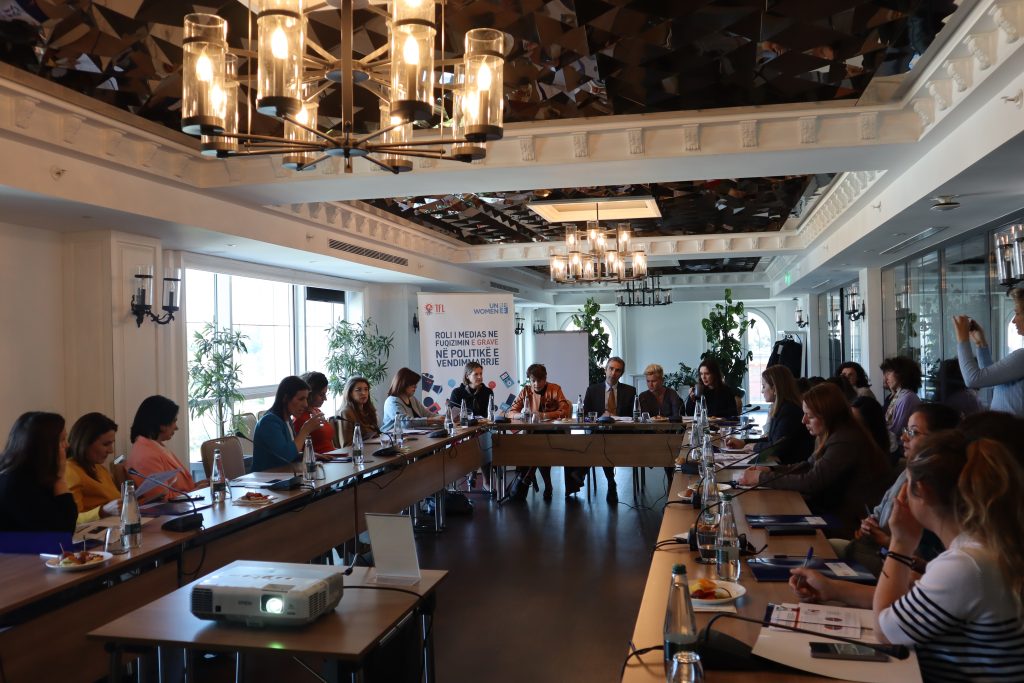
Shoqata Together for Life në bashkëpunim me UN Women Albania organizoi një forum mediatik me temë ‘Media dhe dhuna ndaj grave në politikë dhe gjatë zgjedhjeve’. Gazetarë të aktualitetit, përfaqësues të mediave më të rëndësishme në vend, si: Top channel, Klan Tv, News 24; Vizion Plus, A2Cnn, etj., ekspertë kombëtarë dhe ndërkombëtarë, përfaqësues të UN Women Albania si dhe të British Embassy Tirana, diskutuan rolin e medias në raportimin e dhunës ndaj grave në politikë dhe zgjedhje.
The activity was moderated by the media expert, also gender policy specialist, Mrs. Valbona Sulce.
- Michele Ribotta, përfaqësuesi i UN Women në Shqipëri, në fjalën e tij përshëndetëse ndërsa adresoi disa nga problematikat që reflekton media, ku grave në politikë u kushtohet më pak hapësirë për prezantimin e punës, programit apo ideve që ata kanë, tha se është thelbësore që të punohet me median profesionale, që media të bëhet pjesë e zgjidhjes, dhe jo të vazhdojë të jetë pjesë e problemit. ‘Vitet e fundit kemi parë shumë avancim të grave në politikë. Ato po zënë më shumë vende në parlament dhe kabinet. Në nivel qendror, ne po shohim më shumë gra që po udhëheqin diskutimin politik në vend dhe kjo është një gjë shumë e mirë. Por, kjo duhet të reflektohet edhe në qeverisjen lokale’, tha z. Ribotta.
Ms. Mia Marzouk, Deputy Ambassador of the United Kingdom to Albania, in her speech to journalists and guests, gave some important messages related to the topic of discussion.
‘“All of you who are sitting here are now here because you are journalists, producers, and almost all of you are women. I consider this an added value. My husband is a journalist, my father was a journalist, but they are both male. Regardless of how brilliant they were in their profession; they lacked a certain empathy for this specific issue. However, we see them as allies, as we cannot tackle this alone as women. Women not only need to report on certain issues in certain ways, but they can also suffer certain reactions related to the persons they report on.”
‘“We supported a project that some of you may be aware of, which produced a booklet, a study that includes the voices of 30 women from rural areas such as Puka, Shkodra, etc. This is not a statistically satisfying number of representatives, but these are the voices of women that have hardly been heard. So we thought to take the opportunity today to sit at a table with a group of journalists who can influence these women’s voices being heard. I will try to present to you some expressions from them, with the aim of respecting their contribution to this study. One woman says: “Candidates talk to us, but we are not respected. It is our duty to decide”. So, these 30 women want to be involved and be part of decision-making. Many of these women have been victims of domestic violence, but they have hope: “I would do more, if I had the opportunity”. “We need to make politics work for Albania’s future” this is the message of a woman who supports you, this is my message to you,” concluded the deputy/ambassador her speech. ““We need to make politics work for Albania’s future” this is the message of a woman who supports you, this is my message to you,” concluded the deputy/ambassador her speech.’, përmbylli zv/ambasadorja fjalën e saj.
Rachel Weston, Specialiste e politikave rajonale, UN Ëomen Evropë & Azia Qëndrore, tha se ‘dhuna ndaj grave në politikë ka si synim të pengojë zbatimin e të drejtave të tyre politike. Kjo prek jo vetëm gratë që kandidojnë, por edhe gratë pjesë e shoqërisë civile. Nga ana tjetër, ndikon në mënyrë jo të drejtpërdrejtë edhe grate gazetare. Në kontekstin zgjedhor, dhuna ndaj grave ndikon pjesëmarrjen e tyre si kandidate, votuese, aktiviste, punonjëse zgjedhore, apo çdo lloj punonjësje tjetër të përfshirë përgjatë procesit zgjedhor.
Sidomos gratë që janë aktive në sferën politike ose në organizata për mbrojtjen e të drejtave të grave, po targetohen përmes turpërimit, ngacmimit dhe dhunës, edhe ky fenomen po rritet dhe po përhapet edhe në median sociale online. Fenomeni theksohet më së shumti gjatë periudhës së procesit zgjedhor. Është një fenomen që burrat në politikë nuk e përjetojnë.
Female journalists are also facing harassment due to their involvement in the public sphere. Açording to a study by an international organization, a high percentage of female journalists who are targeted online also face personal harassment. Online space amplifies and facilitates hate speech. Some of the studies that UN Women is conducting are in different areas of the region about women running for election, and it is observed that the prevalent form of violence is psychological and economic. Often, we read in newspapers that female candidates are criticized about their personal lives, their marital status, or if they have children, what that means for them as mothers, and about their possible extramarital relationships, etc.,” said Ms. Rachel.
Female journalists are also facing harassment due to their involvement in the public sphere. Açording to a study by an international organization, a high percentage of female journalists who are targeted online also face personal harassment. Online space amplifies and facilitates hate speech. Some of the studies that UN Women is conducting are in different areas of the region about women running for election, and it is observed that the prevalent form of violence is psychological and economic. Often, we read in newspapers that female candidates are criticized about their personal lives, their marital status, or if they have children, what that means for them as mothers, and about their possible extramarital relationships, etc.,” said Ms. Rachel..’ tha znj. Rachel
Estela Bulku, Drejtore e programeve, UN Women Shqipëri gjithashtu foli për gazetarët, duke u ndalur në mënyrë të vveçantë në një monitorim që UN Women ka bërë gjatë zgjedhjeve të prillit 2021 në Shqipëri, me fokus dhunën ndaj grave gjatë zgjedhjeve dhe pabarazia gjinore në mbulimin mediatik. ‘Duke qenë shumë e vështirë të identifikohet apo të raportohet dhuna ndaj grave gjatë zgjedhjeve, u përpoqëm të sjellim evidence nga media. Pasi, një nga aktorët shoqëror që përforcon dhunën ndaj grave në politikë është edhe media.’, tha znj. Bulku
Ndërkohë për të nxitur diskutimin mes gazetarëve ishin të ftuar dy figura të rëndësishme në fushën e medias dhe në fushën e së drejtës. Profesori i gazetarisë, Z. Artan Fuga pati një bashkëbisedim interesant me të ftuarit. Në fjalën e tij ai evidentoi disa çështje të rëndësishme për dhunën me bazë gjinore dhe veçanërisht dhunën ndaj grave në politikë. Midis të tjerash prof. Fuga tha se ‘në Shqipëri dhuna e parë është që nuk kemi informacion. Në fushata elektorale propozimet i parashtrojnë kryetarët e Partive. Janë rreth 100 parti, kërkojmë emrat e kryetarëve të partive dhe si gjejmë dot’.
Profesoresha e së drejtës, znj. Eralda Methasani u ndal në temën ‘ Seksizmi në media dhe ndryshimet në ligjin për mediat’ . znj. Methasani përmendi disa ndryshime të rëndësishme në ligjin për Median Audiovizive në RSH’ ku është përfshire përkufizimi I termit ‘seksizëm në media’; parimi I barazisë dhe mosdiskriminimi gjinor në median audio-vizive; mostransmetimi I programeve diskriminuese, edhe për shkaqe gjinore.
In conclusion, journalists had a free discussion, bringing their experience and perspective on how journalists can address violence against women in politics and elections. Based on their experience, they said that it is very difficult to interview or talk to female candidates during election periods. “To convince a female candidate to speak during elections is very difficult,” said Lindita Cela, an independent investigative journalist.
“The issue is what weight women have in politics?” another present journalist said. “It’s not just a matter of involving women, but also the role and impact they have.”
Journalists also talked about gender quotas imposed by the law. This law is respected only to report that we have made considerable progress in terms of achieving standards for the inclusion of women in politics, but their role and impact are almost zero.